
Hosinsul on Gradings: Technique, Safety, and Fair Assessment
By Roy Rolstad
One of the recurring discussions in Taekwon-Do, especially among experienced instructors, is how Hosinsul (self-defence) should be conducted and assessed during gradings. The debate is healthy, necessary, and reflects a deeper question:
What are we actually testing when we examine self-defence?
Recently, this discussion resurfaced in a conversation with a respected Taekwon-Do colleague. His position was that Hosinsul during grading should be more unpredictable and realistic, possibly involving unfamiliar partners and unscripted attacks, while still being performed “with some control.”
My position, aligned with both long-standing ITF tradition, the principles of ITF Radix, examining law enforcement recruits and law enforcement rerseetification in use of force and selfdefense is different:
A grading is not the place for realism by default. It is the place for clarity, safety, and technical evaluation.
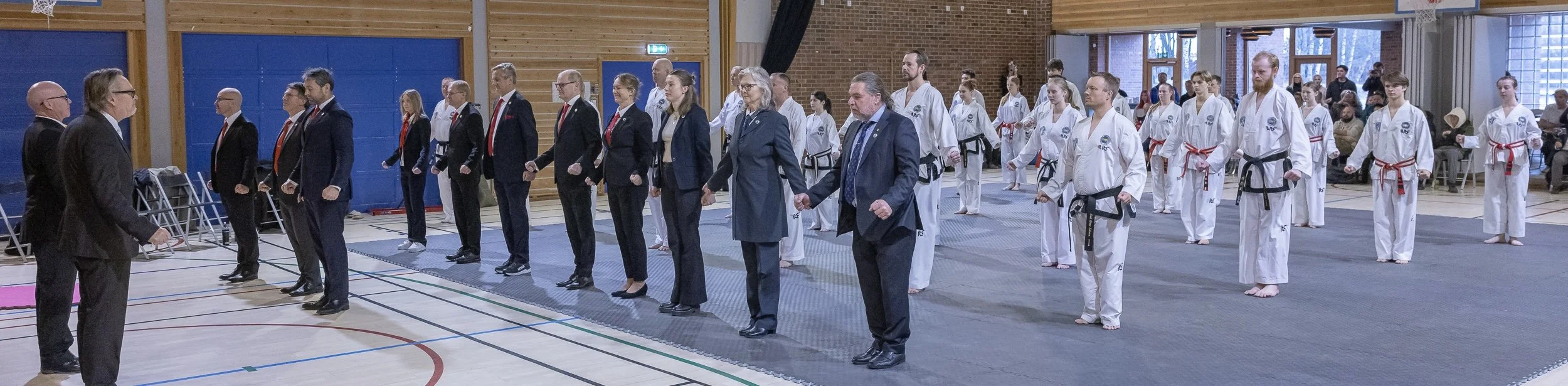
This becomes especially important when gradings are conducted with joint examiner panels and candidates from multiple clubs and instructors, which is often the case at regional and national examinations.
The Purpose of Hosinsul in a Grading Context
In Taekwon-Do, Hosinsul on a grading should have a clearly defined purpose. It exists to give the examiner a structured basis to evaluate whether the candidate demonstrates:
Understanding of fundamental self-defence principles
Technical skill appropriate to age and grade
Balance, coordination, and body control
The ability to apply techniques safely, deliberately, and correctly
Hosinsul at grading is therefore a technical assessment, not a stress test, a fight simulation, or a competition. It is not intended to replicate real violence, and it should not attempt to do so.
This distinction is crucial, particularly in multi-club grading settings, where neither examiner nor candidate can assume shared preparation, terminology, or methodological emphasis.
Why Controlled Conditions Matter, Especially in Joint Gradings
From an examiner’s perspective, the grading environment must allow for equal evaluation across:
Different ages
Different body sizes
Different genders
Different physical and psychological maturity levels
Different club cultures and instructional approaches
In joint gradings, where students may be examined by instructors they have never trained with, controlled and predictable Hosinsul is not merely a preference, but a necessity.
Allowing unpredictable attacks or improvised scenarios in such contexts introduces variables that are unrelated to technical understanding and progression. Instead, they reward factors such as:
Familiarity with a specific instructor’s training philosophy
Personal tolerance for chaos or stress
Physical dominance rather than technical clarity
None of these provide a fair or comparable assessment basis when multiple clubs and examiners are involved.
The Role of the Partner: A Technical Instrument, Not an Opponent
In a grading context, the partner’s role is often misunderstood.
The partner is not there to challenge, surprise, or test emotional resilience. The partner is there to deliver a clear, correct attack that allows the candidate to demonstrate technical understanding.
This is particularly critical in joint panels, where:
Partners may not have trained together previously
Instructors may interpret “realism” differently
Misalignment increases the risk of injury or misjudgment
For this reason, a framework should specify:
A fixed partner
Known attacks
No improvisation or resistance
This does not make Hosinsul artificial, it makes it transparent and assessable.
Known Attacks and Defined Parameters
In my opinion, Hosinsul should be understood as an application of:
Pattern logic
Biomechanics
Distance and positional principles
These elements require attacks that are:
Clearly defined
Appropriate to age and grade
Agreed upon in advance
This shared framework becomes essential when examiners and candidates do not come from the same training environment.
What should intentionally be excluded in joint grading situations:
Surprise attacks
Compound or deceptive attacks
Multiple attackers
These elements may be valuable in training, but they cannot be assumed as common ground during examination.
Technique Over Drama
A frequent grading error is confusing intensity with quality. I have personally done this mistake in the past myself. It may be entertaining for the public but it has nothing to do with the execution of technique.
I want to place emphasis on:
Distance management
Timing
Balance and posture
Structural integrity
Controlled resolution
In joint examinations, dramatic or highly individual expressions of Hosinsul often lead to inconsistent scoring, not because the techniques are wrong, but because they are interpreted differently by different examiners.
Clear structure removes ambiguity.
Safety Is Not a Compromise, It Is a Shared Responsibility
In any grading, especially one involving multiple clubs and examiners, safety must override stylistic preference.
Controlled tempo, stopped strikes, and safe execution of locks and throws are non-negotiable. A grading environment must protect:
Candidates
Partners
Examiners
The credibility of the system itself
An examination that relies on informal assumptions about “how we usually do it in our club” is fragile and unsafe.
Age, Grade, and Contextual Adaptation
We should support differentiated expectations:
Children and youth
Simple techniques
Lower tempo
Emphasis on escape, distance, and control
Adults and higher grades
Greater technical variation
Smoother transitions
Clear tactical reasoning
However, these adaptations must still sit within a shared and communicated framework when assessments are conducted across clubs.
When a More Realistic Approach Can Be Appropriate
There are situations where a more realistic or dynamic Hosinsul approach may be appropriate during a test—but only under clearly defined conditions:
The examiner panel and instructors share a common understanding of the approach
The candidates have trained specifically for this format
The parameters, intensity, and safety expectations are clearly communicated in advance
All participants are prepared, technically, physically, and mentally
In other words, realism in testing must be intentional and consensual, not improvised or assumed.
This type of approach is far more suitable for:
Advanced adult examinations
Club-specific gradings
Instructor certifications
Specialized self-defence assessments
It should never be introduced ad hoc in a joint grading environment.
Where Realism Primarily Belongs
ITF Radix strongly emphasizes that realistic self-defence training is essential, but its primary home is in:
Regular training
Dedicated self-defence sessions
Seminars and courses
Adult classes with progressive exposure
These environments allow:
Gradual stress adaptation
Instructor oversight
Informed consent
Proper recovery and reflection
Trying to test realism without this preparation undermines both safety and learning.
A Clear Boundary Creates Better Training and Fairer Gradings
One of the most important insights from long-term teaching experience is this:
The clearer the boundary between grading and training, the stronger both become.
Standardised Hosinsul at grading:
Protects students across clubs
Supports examiner consistency
Reduces unnecessary conflict
Preserves trust in the system
At the same time, instructors remain free, and encouraged, to explore realism deeply and responsibly in training.
Conclusion
Hosinsul at grading is not designed to simulate violence. It is designed to evaluate understanding.
This is especially critical when examinations involve:
Joint examiner panels
Candidates from multiple clubs
Different instructional backgrounds
By keeping Hosinsul:
Structured
Controlled
Predictable
Clearly communicated
Adapted to age and grade
we ensure that grading remains what it is meant to be:
A fair, safe, and meaningful assessment of technical progression.
Realism has great value, but only when everyone involved is prepared for it.
Roy Rolstad
ITF Radix
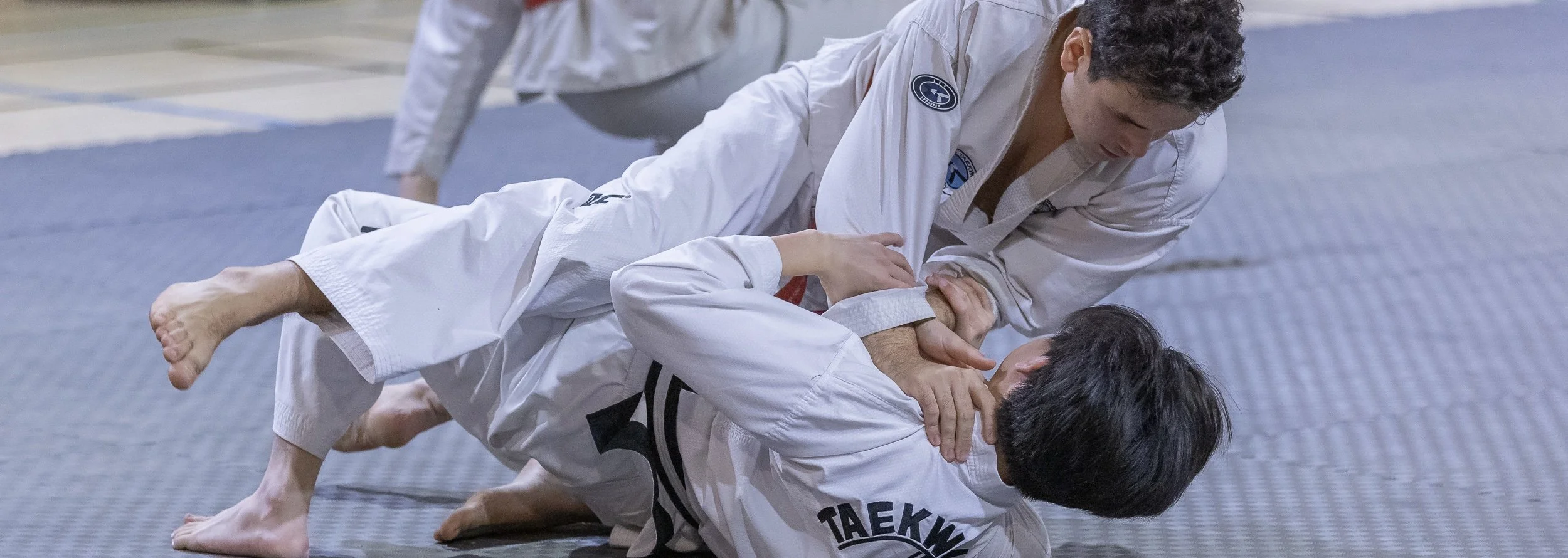
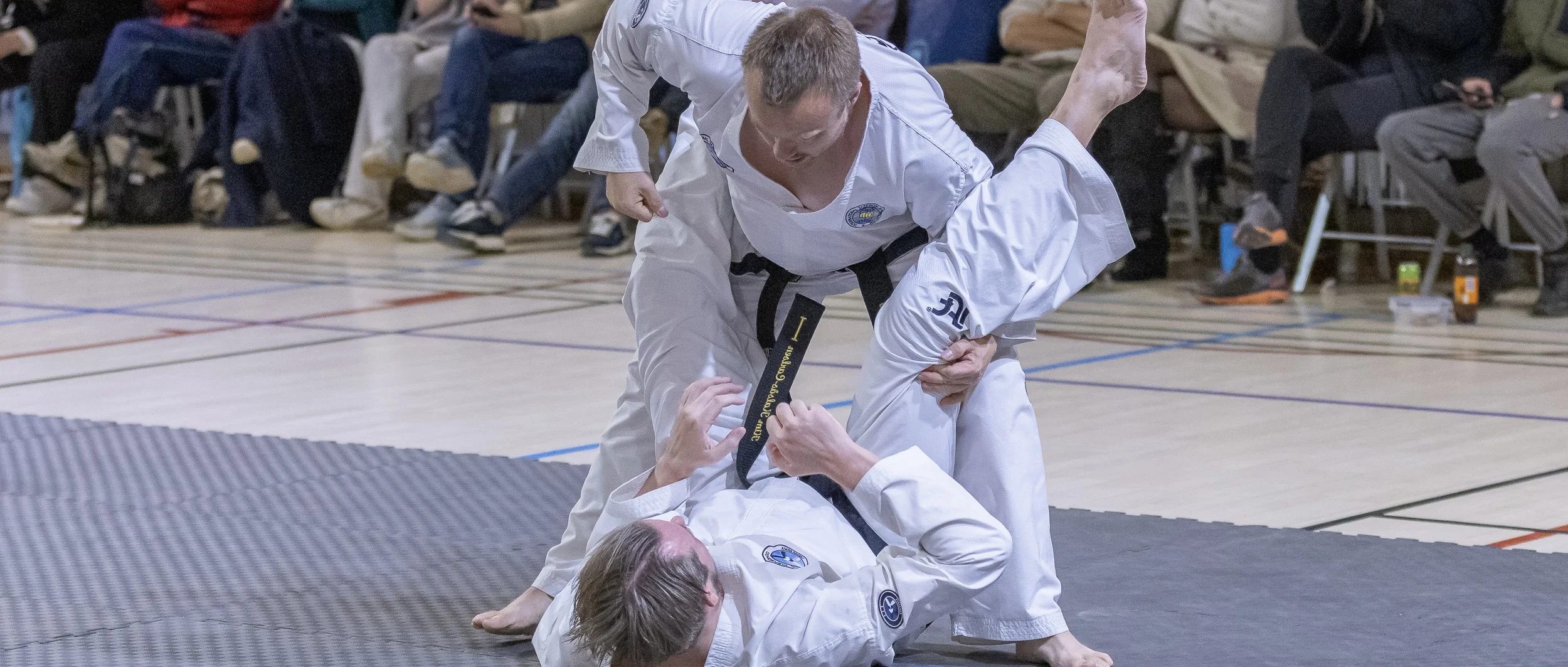
Photo: Raimon Bjørndalen