
Better Questions, Better Black Belts
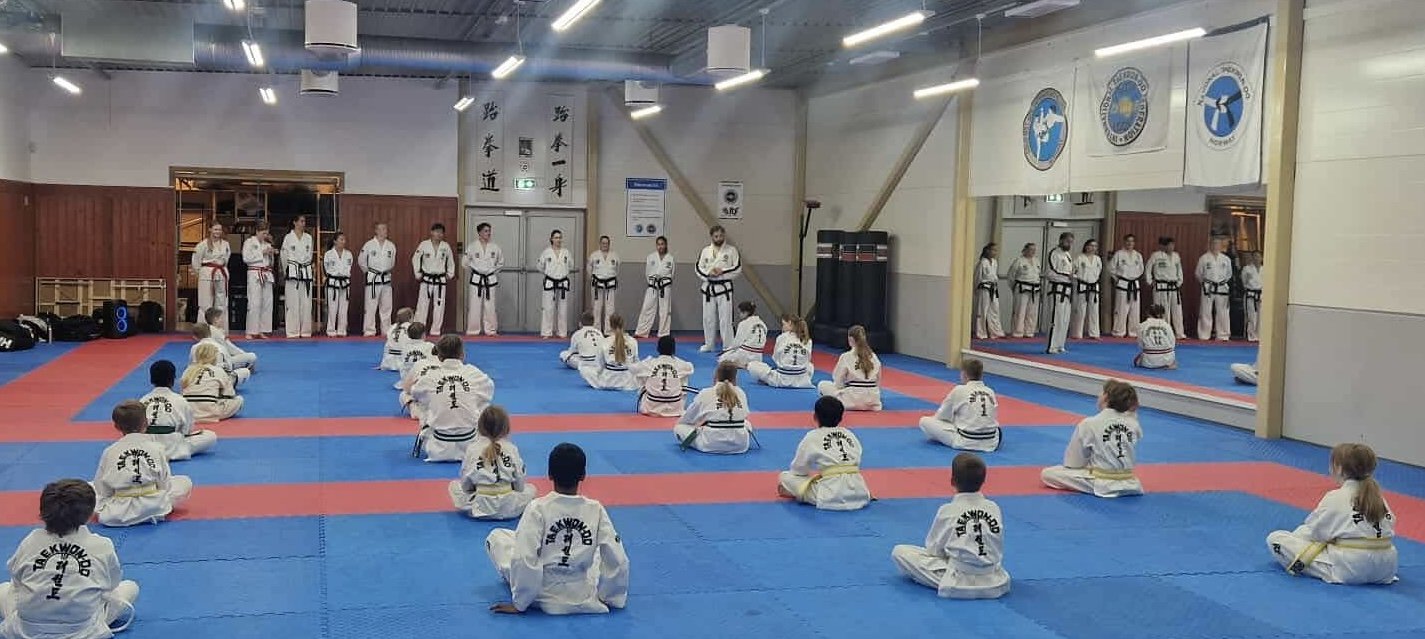
Reflection and Understanding at Taekwon-Do Gradings
By Roy Rolstad
In Taekwon-Do, we often speak about developing the whole person. Technique, physical conditioning, mental strength, and character are all part of the journey. Yet in many grading systems, the primary focus is still on visible performance.
Can you kick high?
Can you move fast?
Can you preform the pattern?
Can you brake the boards?
These are important questions. And there are more to it!
If we want to educate practitioners, and produce performers, we must also pay attention to how students think, reflect, and understand their training.
One of the most effective ways to do this is through well chosen, open questions.
The Grading as a Learning Moment
A grading should be a moment of reflection. It is a pause in the training journey where students are invited to look at where they are, how they train, and where they are going.
When we include reflective questions in a grading, we send a clear message:
Your thinking matters.
Your attitude matters.
Your understanding matters.
This changes the entire atmosphere of the test.
Instead of being only about approval or rejection, it becomes part of the learning process. At a grading you really have a unique moment where you have the full attention of the student.
A Strong Norwegian Tradition
In Norway and NTN, we have a long and strong tradition of emphasizing the five tenets of Taekwon-Do at gradings.
For decades, Grand Master Per Andresen has consistently highlighted their importance at tests at all levels, from beginners to senior black belts. Especially at high degree gradings, reflection on courtesy, integrity, perseverance, self control, and indomitable spirit has always been central.
This tradition reminds us that rank is not only a measure of technical skill, but of personal development and responsibility.
It also sends a clear message to students: the higher you go, the more these principles matter.
Working With the Five Tenets
In ITF Taekwon Do, the five tenets form the ethical foundation of our art. They are meant to guide behavior in training, competition, leadership, and daily life. They are not meant to remain abstract concepts in the encyclopedia.
During gradings, I often ask students questions such as:
“Which tenet speaks most to you, and why?
”Which one do you feel strongest in?”
“Which one challenges you the most?”
“Which one do you believe is most important?”
“Can any of the tenets come into conflict with each other?”
There are no standard answers to these questions. Each student must find their own understanding.
That personal process is what gives the tenets real meaning.
Developing Self Awareness
When students are asked to reflect on their own strengths and weaknesses, something important happens.
They stop waiting for external judgment.
They begin to evaluate themselves.
This is the foundation of long term development.
A student who can honestly say, “I need to improve my perseverance,” is already on the path to improvement. A student who recognizes limits in self control or confidence has taken the first step toward growth.
Self awareness is a skill. It must be trained, just like patterns and sparring.
Beyond Memorization
It is easy to memorize definitions.
It is much harder to explain how integrity influenced a difficult decision, or how perseverance helped you continue after injury or disappointment.
Open questions reveal whether a student has internalized the principles or only learned to repeat them.
True understanding shows itself in personal examples, thoughtful pauses, and honest uncertainty.
This is far more valuable than perfect recitation.
When Principles Meet Reality
One of the most meaningful discussions often comes from the question of conflict between principles.
At first, many students assume that the tenets always align.
With experience, they begin to see complexity.
Perseverance may clash with the need for recovery.
Indomitable spirit may conflict with courtesy.
Self control may limit emotional expression.
Learning to navigate these tensions is part of becoming a mature martial artist.
It teaches that Taekwon-Do is all about wise judgment.
Creating a Supportive Environment
For reflective questions to work, the environment must feel safe.
Students must know that honesty will not be punished.
Uncertainty will not be mocked.
Different perspectives will be respected.
As instructors, our task is to guide them toward deeper understanding.
Sometimes this means following up gently.
Sometimes it means listening more than speaking.
Sometimes it means accepting imperfect answers.
That is real teaching.
Integrating Reflection Into Training
Master Robert Boer have always asked the questions “Why?” and “How?” To promote reflections among the students at our seminars. So in the ITF Radix project, we work with a simple progression:
Learn the pattern!
Learn the application!
Play with the application!
Fight with the application!
To this, reflection adds an essential dimension.
Why does this work?
When does it fail?
How does it fit my abilities?
How does it reflect my values?
When students learn to ask these questions themselves, they become independent practitioners rather than dependent followers.
Building Complete Practitioners
Over time, reflective training produces students who are:
Technically competent
Mentally resilient
Ethically grounded
Self directed
Confident without arrogance
These qualities do not appear by accident. They are developed through consistent teaching choices.
One of those choices is how we ask questions.
We can conclude that a grading should answer more than whether a student can perform.
It should reveal how they think.
How they take responsibility.
How they understand their role in the art.
By integrating thoughtful, open questions into our grading culture, and by building on the strong Norwegian tradition established by Grand Master Per Andresen, we transform tests into milestones of personal development.
Better questions lead to deeper understanding.
Deeper understanding leads to stronger practitioners.
Stronger practitioners build stronger Taekwon Do.
That is the long game.
When the instructor got the integrity of encouraging students to question everything!
-Roy Rolstad