Twenty Years Later, I Still See Ho Sin Sul the Same Way
By Roy Rolstad
Easter 2005
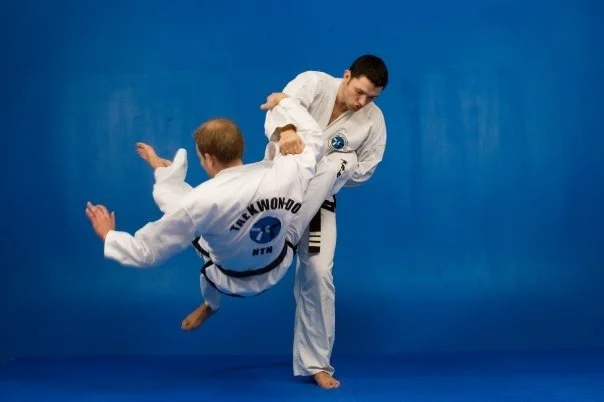
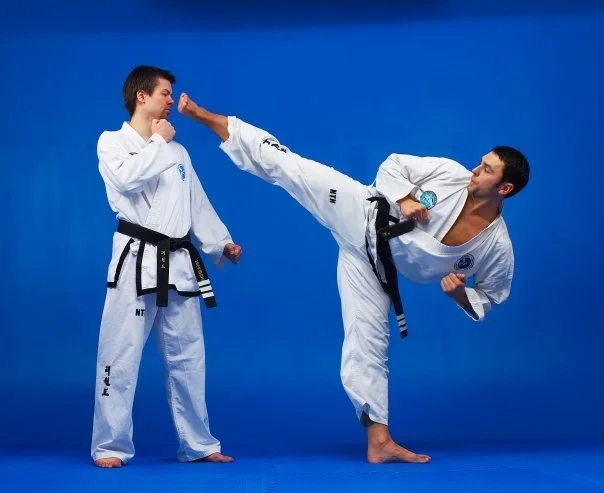
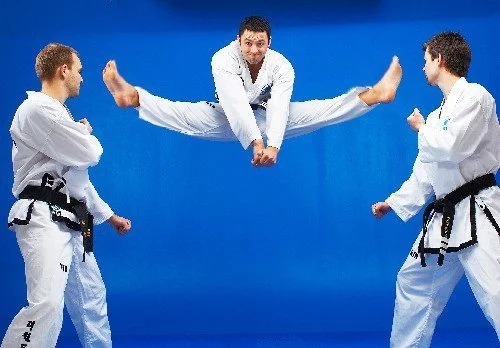
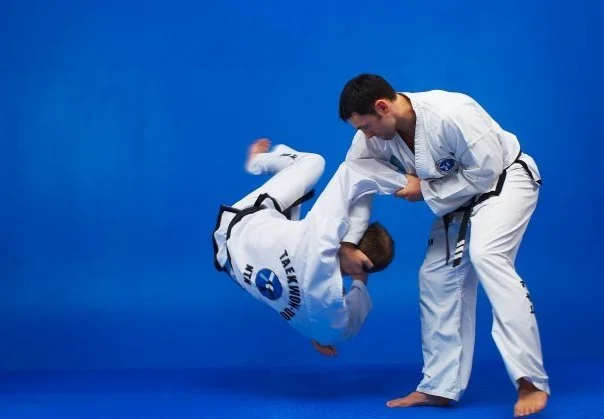
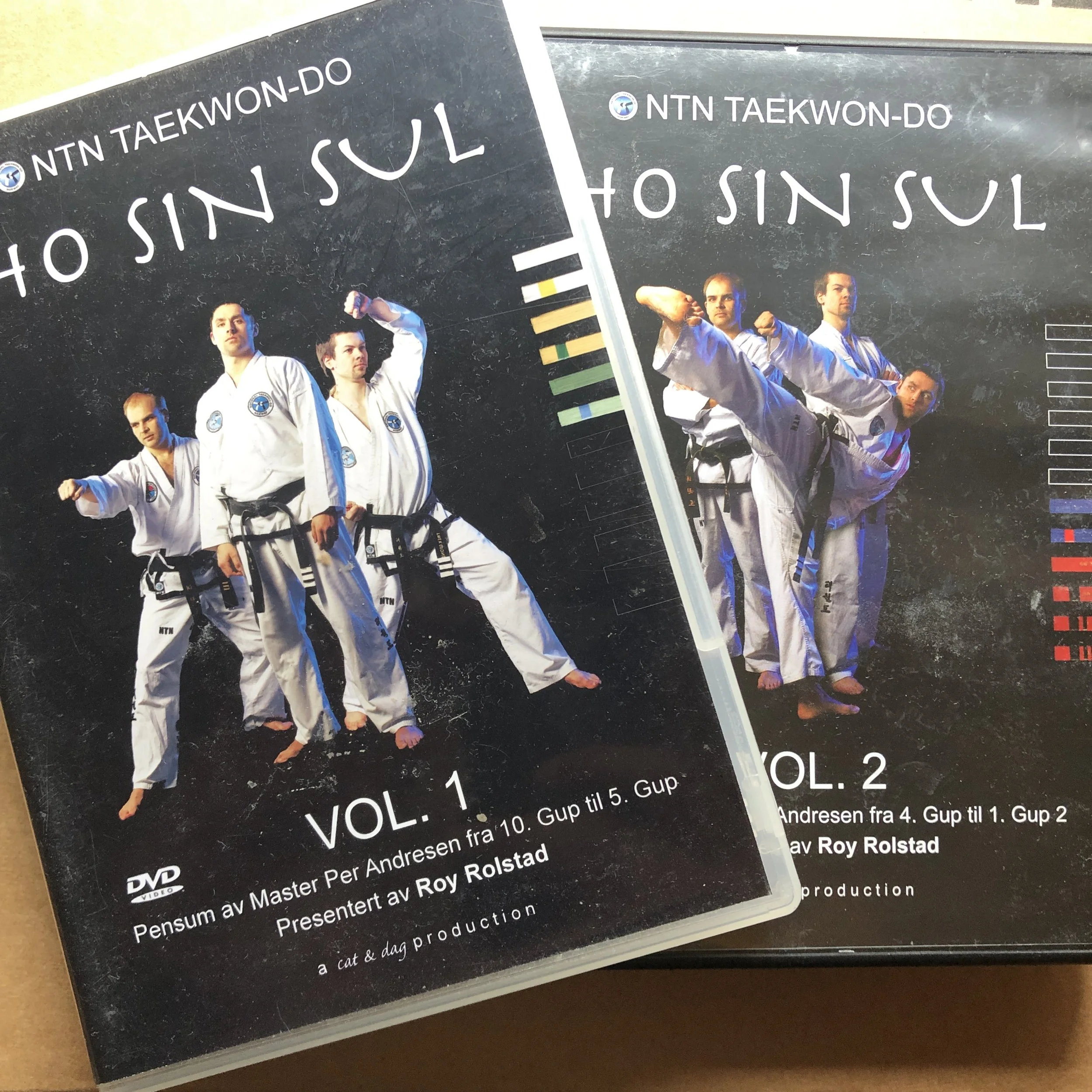
We spent four straight days filming every Ho Sin Sul technique from white belt to black belt for NTN Taekwon-Do. In total, the project became 48 techniques spread across two DVD’s. At the time it felt massive. Endless repetitions, camera angles, details, explanations, retakes, sweat, bad jokes, coffee, and long days inside a small studio.
The team was:
Frode Steindal, Jørgen Botnan, and myself.
Back then we were all 3rd Degree black belts.
Now, twenty years later, we are all 6th Degree.
That alone honestly says something about Taekwon-Do. Time passes fast. Suddenly the “young instructors” are the older instructors.
With us behind the scenes were Dag Ivarsøy and Cathrine Francis, handling the media work, photography, editing, and design. We even painted the studio walls in the exact same blue color as the tatamis to create a clean visual background for the filming. Looking back now, it was probably one of the most ambitious Taekwon-Do media projects we had ever been involved in at that point.
And the funny thing is this:
When I look back at the material today, I still agree with a lot of the core philosophy behind it.
Because even back then, we were trying to teach principles.
That is probably the biggest misunderstanding people have about self defense training. Many people look at Ho Sin Sul as a collection of fixed answers to fixed attacks. Someone grabs your wrist, you do technique number one. Someone punches, you do technique number two.
Real violence does not work like that.
Real situations are messy, emotional, chaotic, unpredictable, and fast. That means self defense can never become only memorization. It has to become understanding.
When I read through the old booklet today, I notice that we focused heavily on things like:
-relaxation
-breathing
-mental strength
-balance
-mobility
-timing
-rotation
-presence
That is interesting because none of those things are actually “techniques.” They are human attributes. They are qualities that allow techniques to function under pressure.
And honestly, I think that part matters even more today than it did twenty years ago.
Relaxation Is Faster Than Tension
One of the strongest themes in the old material was the importance of staying calm and physically relaxed.
A lot of martial artists still misunderstand this. They think aggression and tension create power. Usually the opposite happens. The more tense the body becomes, the slower it reacts. Decision making gets worse. Timing disappears. Fine motor skills disappear.
A relaxed body moves faster.
A tense body freezes.
You see this everywhere. In sparring. In grappling. In law enforcement. In competition. Under pressure, the people who look calm usually perform better.
It does not mean they are passive.
It means they are efficient.
Breathing Controls More Than People Think
Back then we wrote a lot about breathing control. Today I probably consider it even more important.
Breathing affects:
-stress levels
-awareness
-emotional control
-endurance
-explosiveness
-recovery
-decision making
Under stress, people stop breathing properly. The shoulders rise. Vision narrows. The body starts dumping energy into panic instead of function.
The ability to control breathing is not some mystical martial arts concept. It is practical. It is operational. It directly affects performance.
This is something I have seen clearly both in martial arts and in use of force training inside corrections.
Timing Beats Strength
Another big concept in the booklet was timing.
Timing is one of those things everybody talks about, yet very few people really train correctly.
Good timing is not magic. It comes from experience, movement, sparring, pressure, failure, repetition, and understanding distance.
Timing is the ability to recognize movement before the movement fully happens.
That is why free sparring matters so much. You cannot develop real timing only through compliant drills. At some point people must deal with uncertainty, unpredictability, and resistance.
That is where martial arts starts becoming alive.
Balance Is Everything
One thing I still strongly agree with from the old material is the importance of balance.
Whoever controls balance usually controls the exchange.
Not only physical balance, mental balance too.
Good Ho Sin Sul is rarely about overpowering somebody directly. It is usually about:
-angles
-positioning
-rotation
-timing
-posture
-structure
-weight distribution
When you start seeing martial arts through those concepts, styles begin to overlap. Suddenly you recognize the same principles inside Taekwon-Do, Hapkido, Judo, BJJ, wrestling, boxing, and Kali.
The human body still moves like a human body.
From Techniques To Concepts
Looking back now, I think the old Ho Sin Sul material was an early step toward what later became ITF Radix.
Because eventually you stop seeing isolated techniques.
You start seeing:
-pressure
-leverage
-reaction
-rotation
-momentum
-structure
-biomechanics
That changes everything.
Patterns look different. Sparring looks different. Self defense looks different. Even traditional movements suddenly begin revealing new layers.
This is one of the reasons I still believe the ITF system contains far more depth than many people realize.
Realism Matters
One part of the old material I still fully stand behind is realism.
We emphasized that the defender should often assume the attacker is physically stronger. That matters. Too much self defense training still depends on unrealistic cooperation.
Real self defense must account for:
-fear
-adrenaline
-chaos
-surprise
-physical disadvantage
-legal boundaries
-escalation
At the same time, training must remain safe and responsible.
That balance is difficult.
Which is exactly why good instructors matter so much.
Twenty Years Later
When I look back at this old project now, I mostly feel gratitude.
Gratitude for the people involved.
Gratitude for the friendships.
Gratitude for the journey.
And gratitude for the fact that we are all still training twenty years later.
The techniques evolved.
The understanding evolved.
The perspective evolved.
Still, the core idea remains exactly the same:
Ho Sin Sul is about developing people who can function under pressure with awareness, adaptability, control, and presence.
Honestly, I think that is where traditional martial arts still have enormous untapped potential today.
If you are curious about the DVD. During corona I uploaded all the techniques on the Instagram account: ITFRadix
If you scroll down in the history of that account, you’ll see a bunch of blue videos.
Enjoy