
Author: Roy Rolstad
After more than twenty years working as an instructor in physical use of force across all levels of the Norwegian correctional system, one lesson has repeated itself again and again.
Technique alone is never enough.
In many martial arts discussions, and even in professional security training, people often search for the “right technique.” They want the correct entry, the correct movement, the correct solution to a dangerous problem.
But real situations rarely work that way.
The truth is simple. There is no completely safe method when dealing with violence. There are only choices that reduce risk more than others.
This insight is not unique to corrections work. It applies equally to martial arts, self defense, and the study of Taekwon-Do patterns. In ITF Radix we constantly explore how movement becomes meaningful only when it is connected to intention, context, and understanding.
Technique is the final expression of something deeper.
The Reality of Risk
In corrections work we sometimes have to move into environments where violence may occur. A cell, a corridor, a room, or a confined area can quickly become a high risk space.
In these situations the same question often appears.
What is the correct way to enter?
Should we move fast or slow?
Should we move dynamically or methodically?
Should we commit immediately or take time to gather information?
People often debate these questions as if there is a universal answer. In reality, there is not.
The only guaranteed way to avoid injury is not to enter at all.
But the nature of our work does not allow that luxury. Whether in corrections, law enforcement, or self defense, there are moments where action is necessary.
When action becomes necessary, the question is not about finding a perfect method. The question becomes how to choose the option that gives us the best chance of success.
Strategy Before Technique
Over the years I have found that the most useful way to approach these situations is through three simple questions.
First: What are we trying to achieve?
Are we stopping an assault?
Are we controlling an aggressive individual?
Are we protecting someone else from harm?
Are we simply trying to stabilize a situation?
Each of these goals leads to different tactical decisions.
Second: What is the urgency of the situation?
If someone is in immediate danger, time becomes the critical factor. Speed may become necessary.
If the situation is stable, time may be on our side. That allows us to slow down, gather information, communicate, and use additional resources.
Third: What does the environment look like?
Structures matter. Angles matter. Distance matters.
A small cell is different from a corridor.
A crowded room is different from an open space.
Furniture, walls, and doorways all change the dynamics of a confrontation.
Understanding the environment is often the difference between controlling a situation and being surprised by it.
The Balance Between Speed and Awareness
One of the most important lessons for students and professionals alike is the relationship between speed and information.
When we move quickly, we gain time. But we lose information.
When we move slowly, we gain information. But we lose time.
Neither option is automatically correct.
The key is to understand which factor matters most in the moment.
In some situations speed saves lives. In other situations patience prevents escalation.
The ability to recognize the difference is a form of tactical maturity.
The Principles That Do Not Change
While tactics may change from situation to situation, some principles remain constant.
Angles are angles. Geometry does not change.
Who sees first often decides the outcome of the encounter.
Controlling angles, controlling distance, and avoiding unnecessary exposure are universal principles whether we are talking about corrections work, self defense, or martial arts.
In training we work to develop movements that place us in positions of advantage. We reduce the chance of exposing ourselves unnecessarily and increase the probability of controlling the situation.
In ITF Radix we often explore how the patterns contain these same ideas. Movement inside the forms is not random choreography. It reflects positioning, timing, and decision making.
When we begin to look at the patterns through this lens, they start to reveal practical principles that apply far beyond the dojang.
Thinking Instead of Memorizing
One of the biggest problems in both martial arts and professional training is the search for fixed answers.
Students often want to memorize techniques.
But real situations rarely follow a script.
A technique that works in one situation may be completely wrong in another.
That is why good training focuses on developing thinkers rather than technicians.
A skilled practitioner understands context. They observe the situation, evaluate the environment, and select actions that match the moment.
Technique is still important. But technique must serve strategy.
The ITF Radix Perspective
In ITF Radix we constantly explore the relationship between doctrine, strategy, tactics, and technique.
Technique is what we do.
Tactics describe how we apply those techniques in a situation.
Strategy explains why we choose one approach over another.
Doctrine provides the underlying philosophy that guides our decisions.
When these layers align, technique becomes far more powerful.
Without this structure, technique becomes isolated movement.
With it, technique becomes intelligent action.
Final Thoughts
Whether in corrections training, self defense, or martial arts practice, the lesson remains the same.
Technique is only the final step.
Before technique comes understanding.
Before movement comes intention.
Before action comes strategy.
If we train our minds to think clearly under pressure, the techniques we choose will have a far greater chance of working when it matters most.
That is a lesson learned not only from the training hall, but from two decades of teaching and observing real world use of force situations.
And it is a lesson that continues to shape how I approach both corrections training and the study of Taekwon-Do.
Roy Rolstad
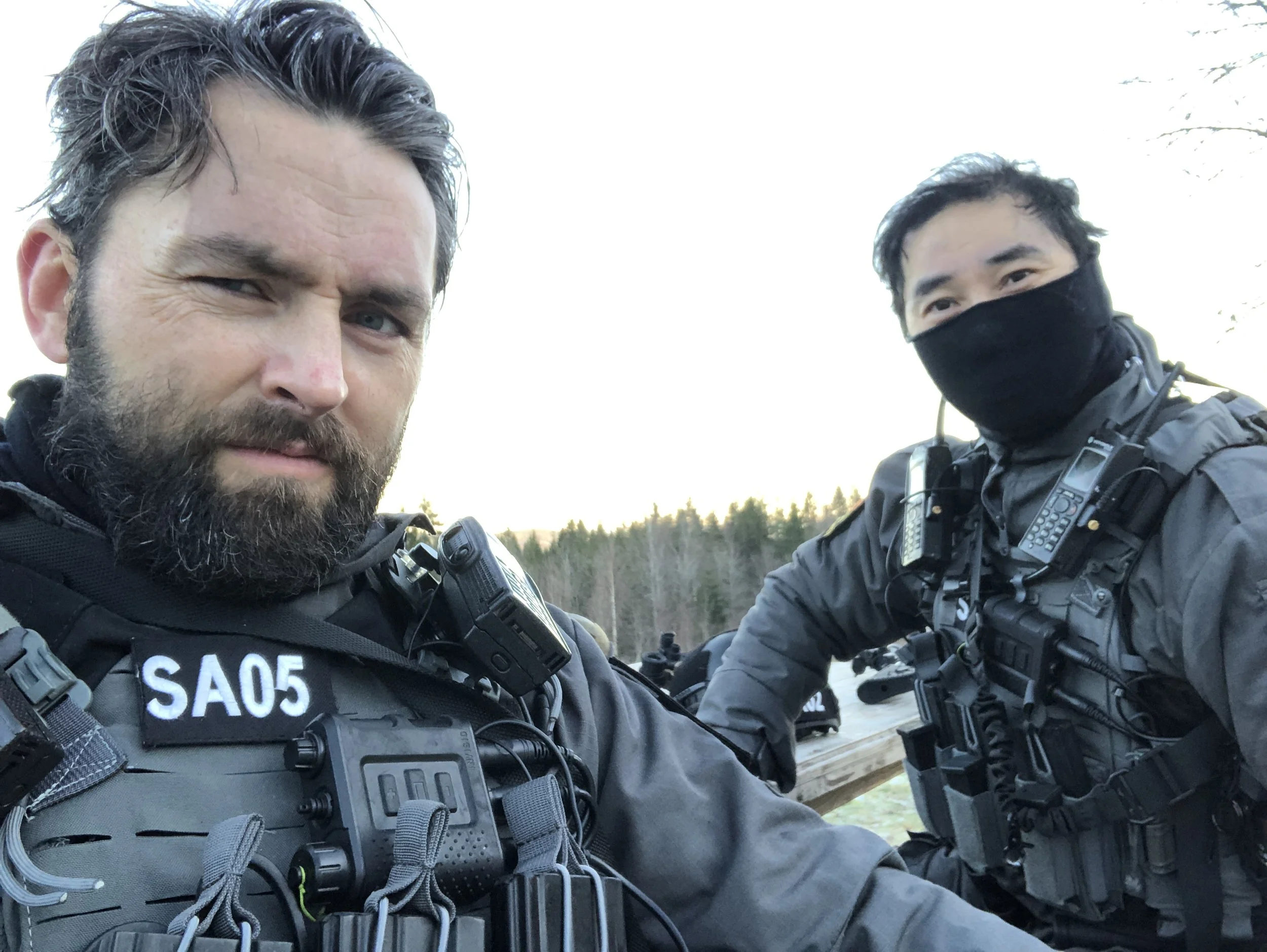

What technique would you use against this guy on steroids, alcohol and speed?